

What is Momme? How to Measure thickness of silk fabrics

Ever wondered what “XX momme” means when shopping for silk, especially luxurious mulberry silk? At first, you might be puzzled about what it means. But after reading product descriptions, you’ll find it’s simply the measure of silk’s weight in square meter, also know as thickness. Let’s unravel the mystery of momme and explore why it matters for your silk experience.
✻ This page may contain affiliate links. If you make a purchase through these links, we may earn a commission at no extra cost to you. We only recommend products we believe will add value to our readers.
What is Momme, Momme’s History?
The unit momme represents the thickness of silk, or more precisely, how many grams there are per square meter. The current international standard is:
1 momme ≈ 4.33 g/m²
To calculate the weight of silk per square meter, simply multiply 4.33 g/m² by the momme value. For example, common silk fabrics are 16 momme or 19 momme, where 16 momme ≈ 68 g/m².
While momme is commonly understood as a measure of thickness in silk fabrics, its fundamental nature is that of a weight unit. Derived from the Japanese unit “momme(匁)” , which itself originates from the Chinese weight unit “qian(钱)“, it is called “mace” in southeast Asia, momme represents a very small weight: 1 momme = 3.75 grams. This unit traces its roots back to ancient China, where “qian” was employed as a weight measurement.
Beyond its function as a weight unit, “qian” also translates to “money.” However, its original connotation was solely that of weight. The practice of using silver as a direct currency in some periods of ancient China led to the adoption of “qian” as a monetary unit in specific contexts. Its unique historical traits can be summarized as:
- 💰 Money: “Qian” literally means “money” in China.
- ⚖️ Weight Unit: It is one of China’s traditional small weight units and among the earliest units used for precise measurement.
- 🪙 Currency Unit: When silver was used directly as currency, “qian” also functioned as a unit of money in everyday transactions.
This unit was subsequently introduced to Japan, where it was called “momme” and represented by the character “匁.” Interestingly, the Japanese employed “momme” not only for weight measurement but also for monetary calculations in ancient too.
With the passage of time, many traditional Chinese cultures have been lost. Nowadays, apart from Traditional Chinese Medicine, the unit “qian” is rarely used in mainland China. However, it’s still in use in regions like Taiwan, Hong Kong, Japan, and Singapore.
“Qian,” or “momme” in Japanese, is a small unit of weight often used for measuring lighter items, such as Chinese herbal medicine. Perhaps due to this reason, it has evolved into a unit of measurement for silk fabrics.
How to Calculate Momme to Gram?
To convert momme to grams, let’s start with some traditional Chinese weight units like liang(两) and jin(斤). Japan’s momme and other similar weight units were directly inherited from these traditional Chinese measurements.
In ancient Chinese measurements:
1 qian (or 1 momme) = ⅒ liang
1 liang = ¹⁄₁₆ jin
So 1 qian = ⅒ × ¹⁄₁₆ = ¹⁄₁₆₀ jin
Based on the ancient weights (mainly from the Qing dynasty) still in use today in some parts of East and Southeast Asia, 1 jin was approximately 600–605 grams. Therefore, 1 qian ≈ 3.75–3.78grams. In Japan, 1 jin is defined as 60grams, so 1 momme = 3.75 grams.
How to Measure the Thickness of Silk Fabrics?
It seems like momme is a unit of weight, so how is it used to measure fabric thickness? Here’s how: when measuring silk fabric, momme represents the average weight of a square meter of fabric. According to international standards, 1 momme represents the weight of a piece of silk with an area of 1 yard × 1 yard (approximately 91.44 cm × 91.44 cm) that weighs 3.75 grams. We must calculate this in square meters to convert this to g/m².

1 yard is equal to 91.44 centimeters (cm), so 1 square yard is:
91.44cm × 91.44cm= 8361.17cm2 = 0.8361m2
The weight of 1 momme is 3.75 grams, so to convert it to grams per square meter (g/m²), we calculate:
3.75g /0.8361m2 ≈ 4.48g/m2
The theoretical conversion for 1 momme (匁) should be approximately 4.48 g/m², but the silk industry has long adopted a standard of 4.33 g/m². The origin of this figure is unclear, and it seems there was already a deviation in the early stages of its adoption. (written on November 7,2024)
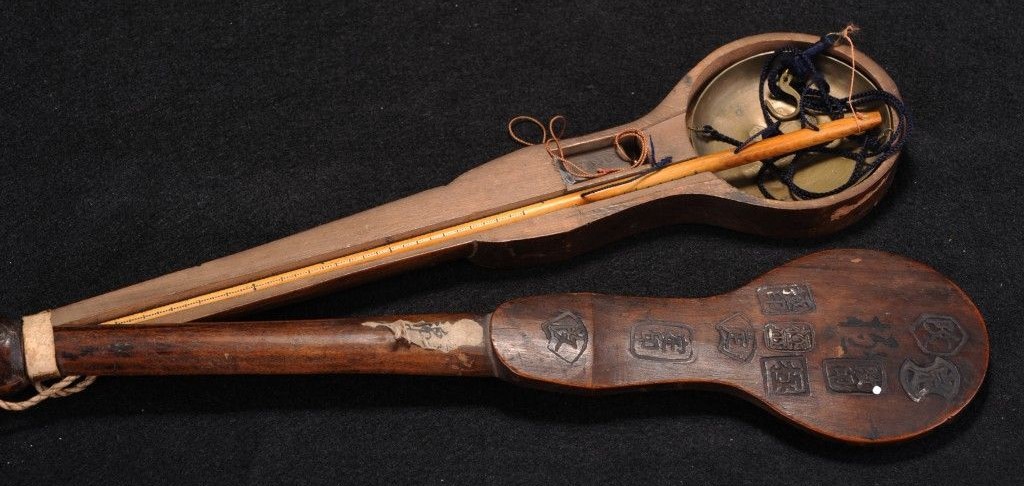
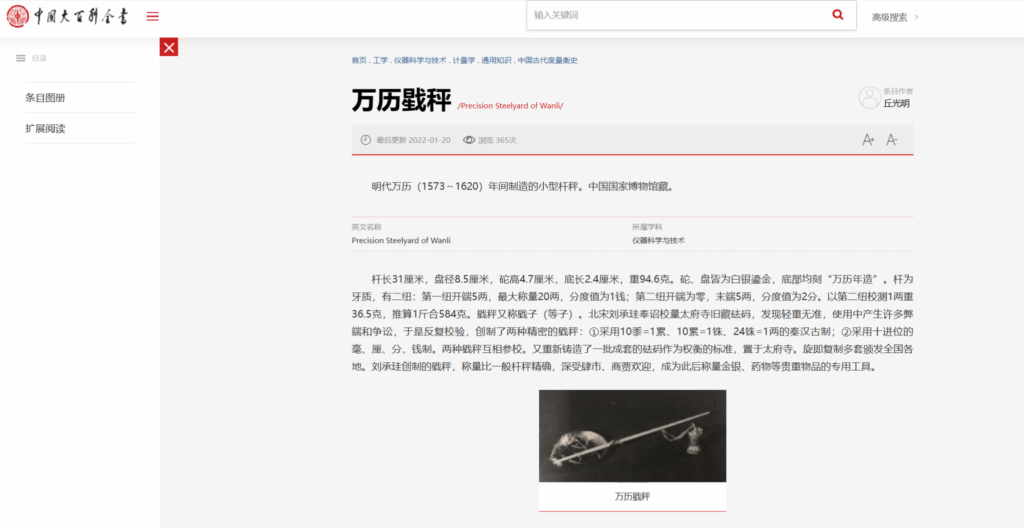
In my recent research (updated on May of 2025), I found that “dengcheng戥秤”, precision balance scales used during the Ming and Qing dynasties, are still preserved in the National Museum of China, complete with original weights. Museum records show that these balances were not only used for weighing traditional Chinese medicines, but also for precious materials like gold and silver, where high accuracy was essential.
Upon measuring these historical original weights artifacts, we found that one “qian” (钱), a traditional Chinese unit, average weighed about 3.62 grams.
3.62g /0.8361m2 ≈ 4.329g/m2
Based on this real-world weight, the calculation yields 1 momme ≈ 4.33 g/m², exactly matching the industry standard.
There’s no doubt about it — this strongly suggests that the commonly accepted value of momme is rooted in ancient Chinese measurement systems, specifically the “jin,” “liang,” and “qian” units. And it makes perfect sense, too, since silk itself originated in China.
This demonstrates that renaming a unit alone doesn’t solve deeper issues, we must trace things back to their origin. While “momme” is a Japanese term, its physical basis seems to align more closely with the Chinese “qian.” Therefore, I believe it is time to reclaim the name and refer to momme as “qian.” This would better reflect its historical lineage, enhance transparency and traceability in the industry, and contribute meaningfully to both the silk trade and the broader history of human measurement systems.
Conclusion
In summary, momme is a unit of measurement used to calculate the thickness and weight (grams per unit area) of mulberry silk fabric. While the term originates from Japan, it actually comes from China, as silk was invented by the Chinese and spread to the rest of the world via the Silk Road.