

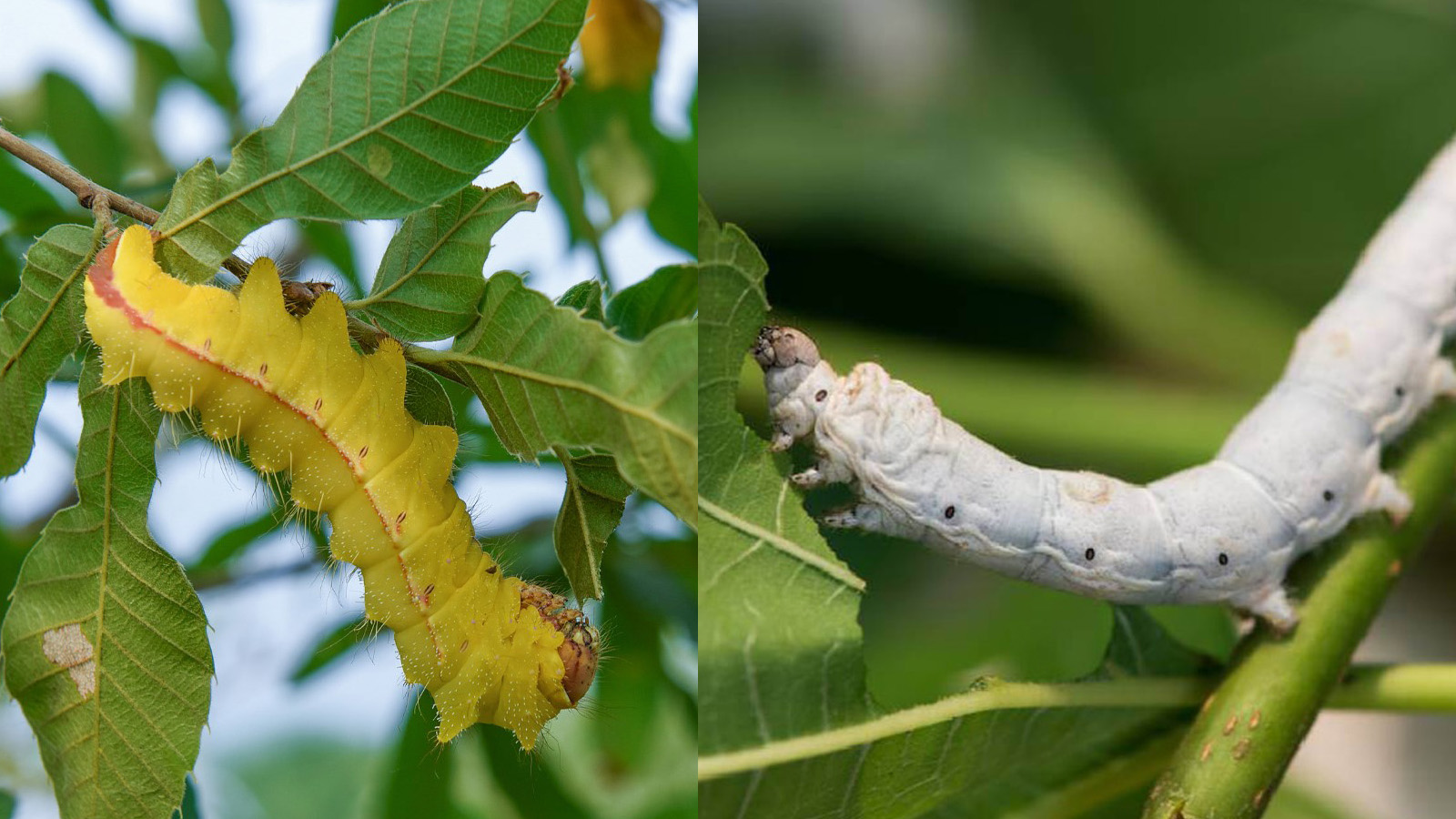
When people talk about silk, they’re usually referring to mulberry silk. But have you ever wondered, is all silk the same? The short answer is no.
Mulberry silk comes from domesticated silkworms, raised in controlled environments and fed on mulberry leaves. But not all silk is made this way. There’s also wild silk, produced by silkworms that live outside of human care. Among the wild silks, tussah silk (made by tussah moths) is the most common, although there are others like eri or castor silk.
So today, let’s take a closer look at the key differences between mulberry silkworm and tussah silk, and both silks, not just in how they’re made, but also in their texture, color, and how they reflect the deeper contrast between tamed and wild nature.
✻ This page may contain affiliate links. If you make a purchase through these links, we may earn a commission at no extra cost to you. We only recommend products we believe will add value to our readers.
Origins: A Tale of Two Silkworms
Domesticated Mulberry Silkworm
Most people don’t realize this, but mulberry silk has an incredibly long and rich history. According to archaeological findings, domesticated silkworms have been raised for at least 7,500 years. The story goes all the way back to ancient China, where a legendary figure—Leizu, is said to have discovered silk by watching silkworms spin their cocoons. She taught people how to plant mulberry trees, raise silkworms, reel silk, and weave fabric. To this day, she’s still honored in China as the “Silkworm Goddess.”
In fact, The entire textile tradition began with silk. The famous warp and weft weaving method is deeply tied to ancient Chinese astronomy, where the terms “warp” and “weft” reflect the cosmic order and the laws of nature. Weaving, in a sense, was a way to align human craft with the rhythms of the universe.
For many Chinese people, raising silkworms is something they’ve actually done as children. It’s almost a national childhood memory. In recent years, as traditional Chinese clothing has become more popular, some elementary schools even ask students to raise silkworms at home, so they can better understand and carry on this ancient tradition.
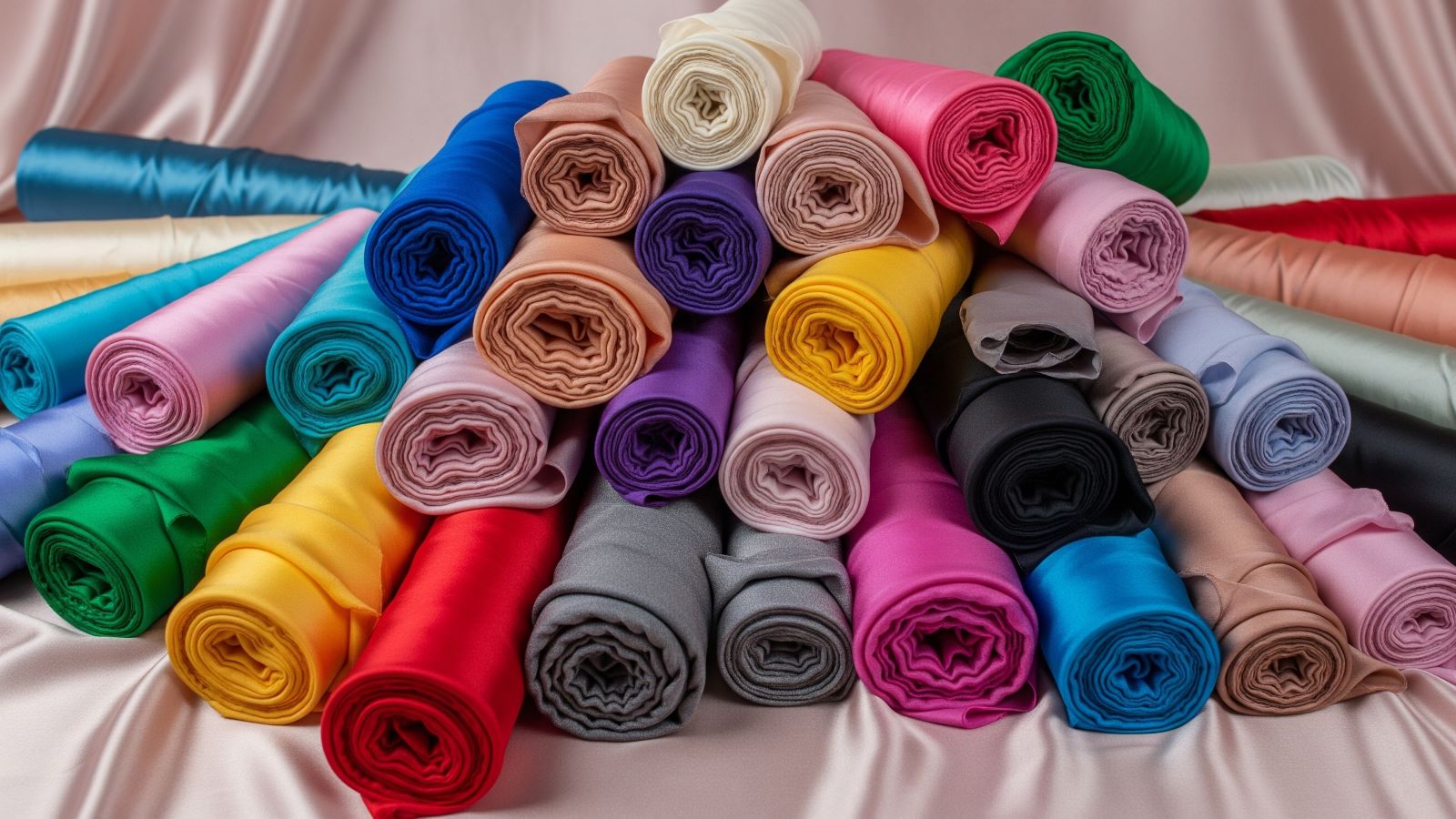
The silk produced by these domesticated silkworms is what we call mulberry silk, and it’s the main material behind almost all the luxurious silk fabrics you know: silk satin (charmeuse), silk crepe, silk organza, and so on.
Wild Tussah Silk
While tussah silk (柞蚕丝called zha silk in Chinese) comes from a different kind of silkworm, don’t worry if you’ve never heard of tussah, it actually refers to the oak tree that produces acorns, the ones squirrels love. Botanically, there are many types of oak trees.
The wild oak silkworm (柞蚕known as Antheraea pernyi), also known as zha silkworm, is not fully domesticated. In fact, tussah moths were originally wild insects living in oak forests, and their silk was used long before humans started raising them. That’s why tussah silk is often called “wild silk” or “mountain silk” in China.
Tussah silk has a much shorter domestication history. The earliest clear records date back to the Jin Dynasty (around the 3rd century CE), though wild silkworms were mentioned even earlier, during the Shang and Zhou dynasties. While tussah silkworms are now partially raised by humans, they’ve retained many of their wild traits, like stronger resistance to the environment and a certain level of self-reliance. Unlike mulberry silkworms, which are fully dependent on humans, tussah silkworms can still survive in the wild.
Efforts to domesticate tussah silk mainly focused on breeding better strains and improving release-and-recapture techniques, rather than changing the insect’s biological nature. So in many ways, tussah silk sits right between nature and nurture, a fascinating blend of wild and semi-tamed.
Appearance of both Silkworms
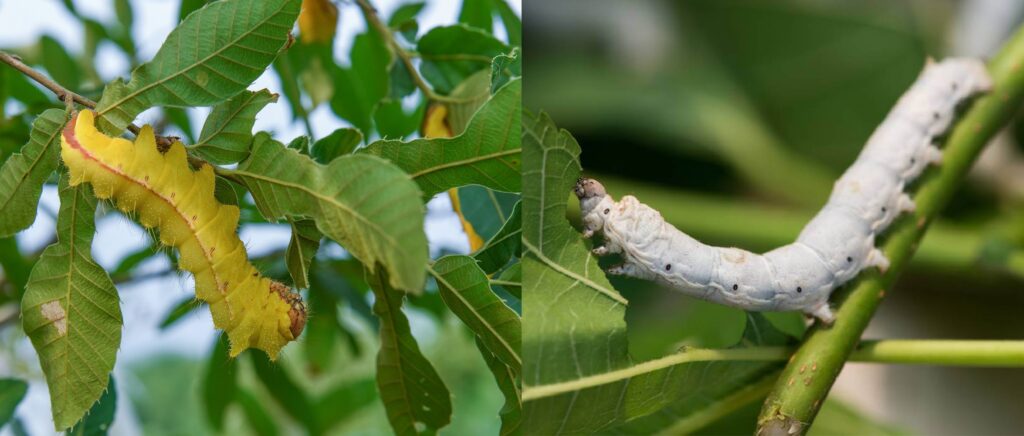
Sometimes, pictures say it best. But here’s a detailed look at the two silkworms at different stages of their life.
Larvae Stage (Caterpillar Phase)
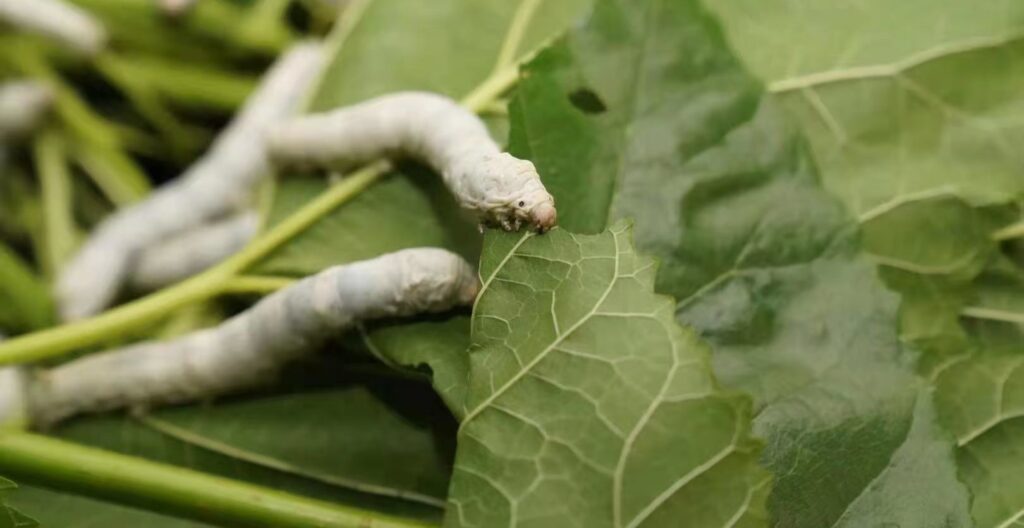
Mulberry silkworm larvae have a long, cylindrical body shape. When fully grown, their color is usually pale blue-white or creamy white, the cute, plump little worms we’re familiar with. This is the result of thousands of years of selective breeding by humans.
- Right after hatching, though, baby mulberry silkworms aren’t white at all. The newly hatched larvae, called “ant worms” because of their tiny size (about 2-3mm) and brownish color, actually look more like ants and are covered in fine hairs.
- As they grow, by the second instar stage, they gradually turn a clear white. During the 1st to 3rd instars, they’re called “small silkworms” or “young silkworms”. From the 4th to 5th instar, they’re “large silkworms” or “robust silkworms”.
Fully grown mulberry silkworm larvae can reach 6–8 cm in length, and during their rapid growth phase, their weight can increase by about 10,000 times! Just before spinning their cocoon, the silkworm’s body glows with a faint golden sheen.
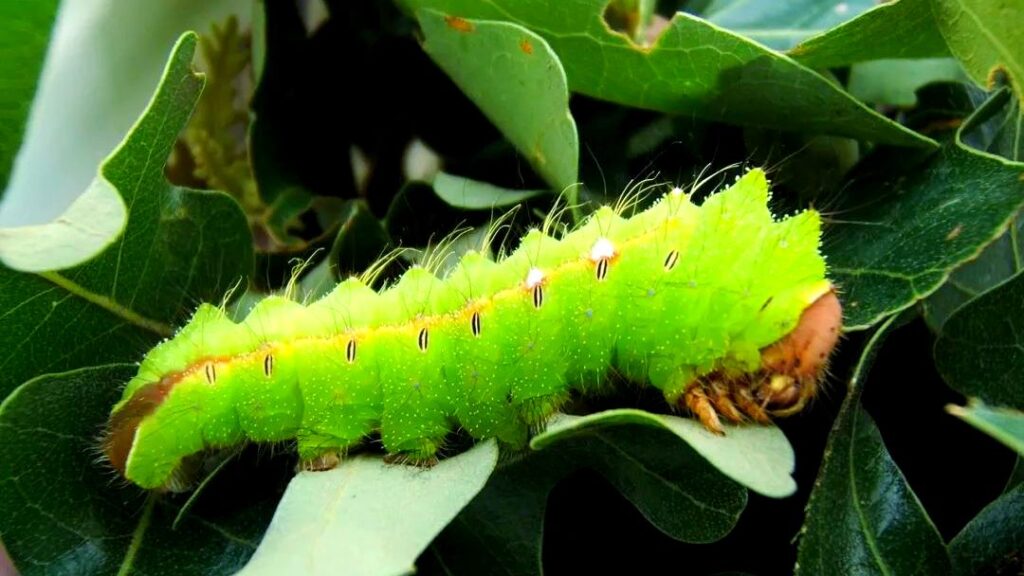
Tussah silkworm larvae show more wild characteristics. Their body colors vary, but mature larvae are mainly yellow or green.
- Tussah larvae are sturdier and also have a long, cylindrical shape. When newly hatched, tussah “ant worms” are black with reddish-brown heads. After molting, they develop the characteristic colors of their particular strain.
- By the 5th instar, tussah larvae grow to 8–9 cm long, 1.5–1.8 cm wide, and weigh between 12–20 grams, about 2,000 to 3,000 times heavier than when they hatched.
Their bodies have noticeable tufts of stiff hairs, which serve as protection in the wild, making them look a bit like the fuzzy caterpillars you might see on trees.
When it comes to cocoons, mulberry silkworm cocoons are pure white, while tussah silkworm cocoons tend to be yellowish or grayish.
Adult Moth Stage
The differences become even more obvious at the moth stage.
- Mulberry silkworm moths are white to gray-white in color, with gray-brown lines on their wings and veins. Their antennae have a double-comb shape. Males are 13–16 mm long with wingspans of 16–19 mm; females are slightly larger at 18–21 mm body length and 19–21 mm wingspan. Due to thousands of years of domestication, mulberry moths have lost their ability to fly.
- Tussah silkworm moths, on the other hand, have retained their flying ability. They are much larger—3–5 cm in body length, with wingspans around 14–16 cm. Their colors range from gray-brown to orange-yellow, and their bodies are covered in scales and hairs. Each forewing and hindwing has a pair of eye-shaped translucent spots surrounded by black, red, blue, and white rings.
Tussah moths usually mate at night right after emerging from their cocoons, keeping their natural wild insect reproductive behaviors.
Rearing and Habits, From Delicate to Tough
Raising mulberry silkworms requires pretty strict conditions. The temperature needs to stay between 20 to 25°C, humidity has to be just right, and the mulberry leaves must be fresh and clean. Even the air needs to circulate well. If you’ve ever raised silkworms before, you know that leaves with dew on them are a big no-no, they can cause the worms to get diarrhea. These little guys are so delicate that even a slight chill or an ant crawling over them could be fatal.
It might sound complicated, but it’s actually not that hard. As long as the leaves are clean and fresh, and the environment is stable, you mainly just need to keep feeding the silkworms and watch them grow. In fact, in China, many kids learn how to take care of mulberry silkworms quite well from a young age.
Tussah silkworms are a whole different story, they’re way tougher. They’re basically free-range on wild oak trees, and they don’t mind wind or sun at all. They can handle temperatures from 8 to 30°C, find their own food, and even defend themselves somewhat against predators.
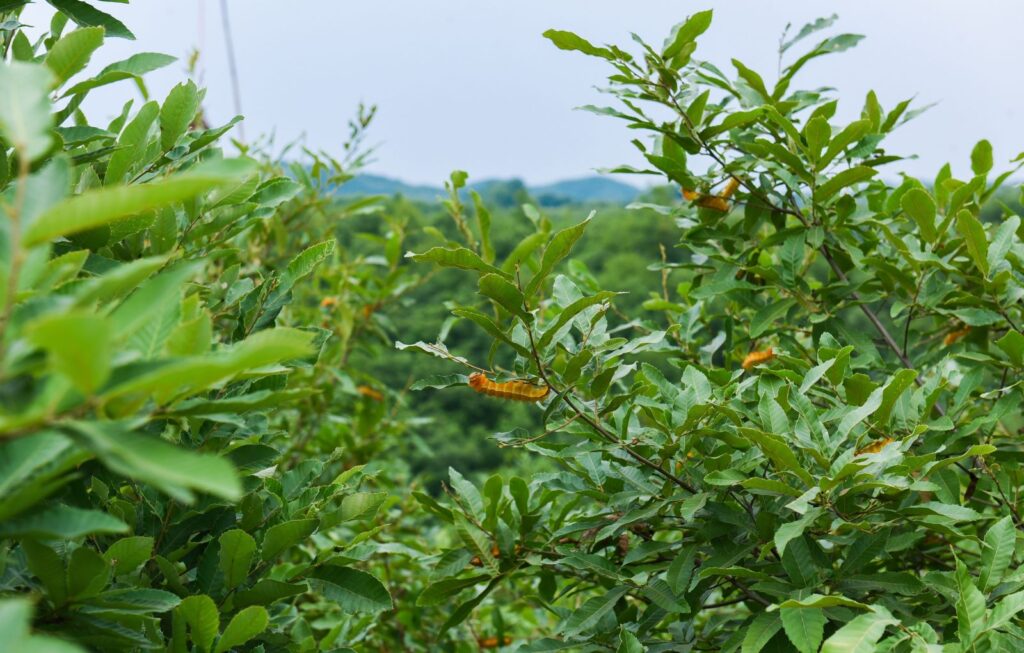
That said, farmers still need to “relocate” them regularly to prevent them from stripping a whole tree of leaves.
Main Food Sources for Two Silkworms
Since mulberry silkworms are fully domesticated, their main diet is, of course, mulberry leaves. But actually, they can also eat leaves from other trees like morus alba, paper mulberry, and elm. However, different leaves have different nutrient compositions, which can affect how well the silkworms grow and the quality of the silk they produce. So, mulberry leaves are still the best choice. If you’re not sure, it’s better not to feed them random leaves, as some might even be toxic to the silkworms.
On the other hand, tussah silkworms mainly feed on leaves from oak species belonging to the Fagaceae family, such as Quercus serrata (Japanese oak), Quercus mongolica (Mongolian oak), and Quercus dentata (Daimyo oak). That’s actually where they get their name “tussah” from — their love for oak leaves.
Besides oak, tussah silkworms also feed on a variety of other plants like willow, chestnut, maple, pear, and apple leaves, showing a wider range of dietary options.
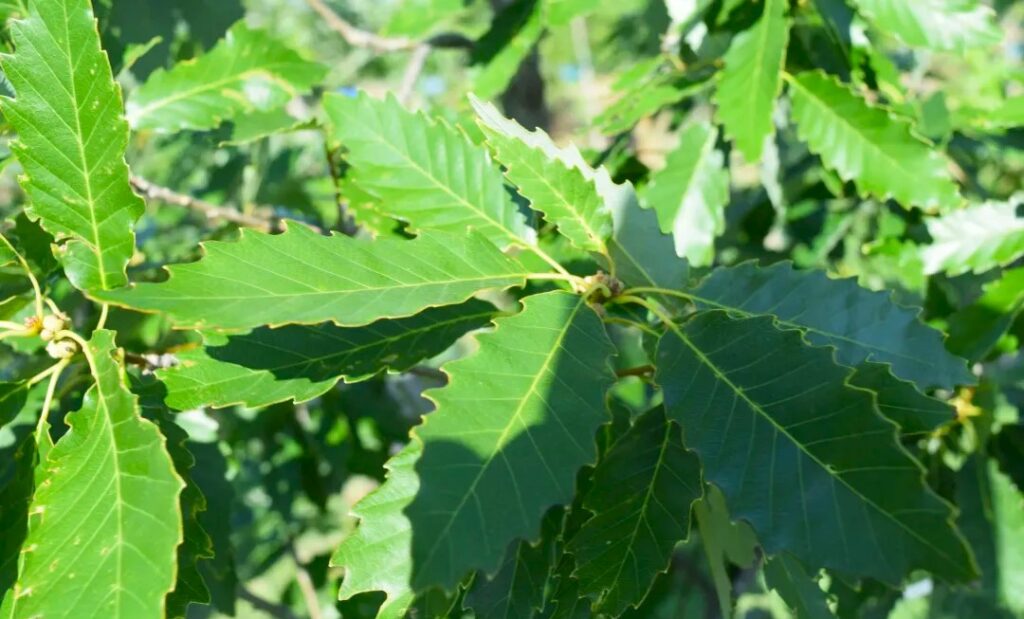
These two silkworms also differ in their feeding habits. Mulberry silkworms tend to eat almost continuously, which is typical for domesticated animals with efficient feeding behavior. Tussah silkworms, however, are more selective—they’ll actively seek out their favorite leaf parts and the best maturity level before eating.
Main Distribution Areas
Mulberry silkworms have long since gone global. They are now farmed in many countries including China, Japan, India, Turkey, and across Europe. This little insect has truly become an international superstar in the world of silk production.
Tussah silkworms, on the other hand, are mainly found in northern China, especially in provinces like Liaoning, Henan, and Shandong. Liaoning alone accounts for about 70% of China’s tussah silk production, with Dandong famously known as the “Hometown of Tussah Silkworms.”
Uses Between Mulberry Silk and Tussah Silk
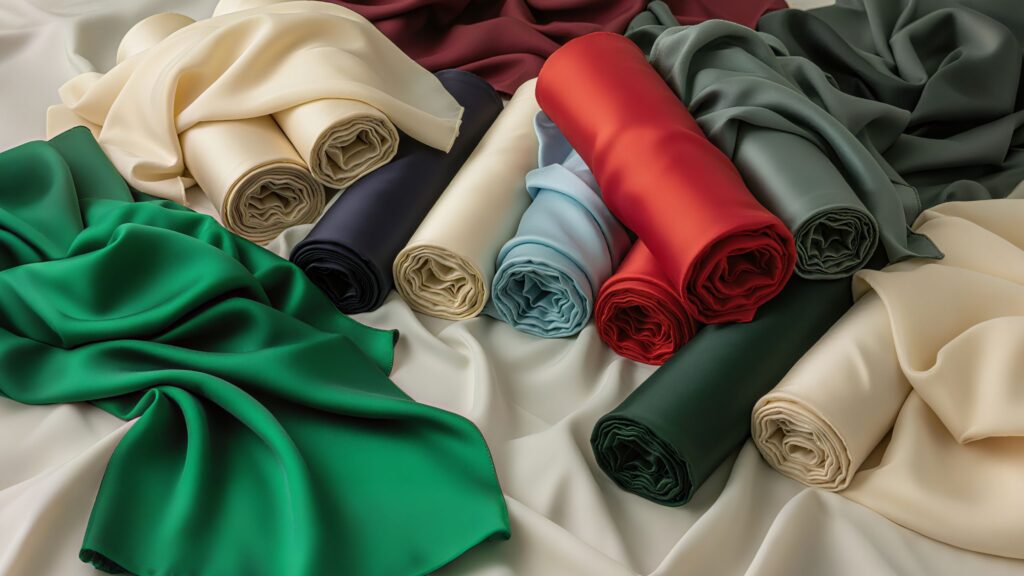
The silk from mulberry silkworms is known for its highly specialized and premium uses. Often called the “Queen of Fibers,” natural mulberry silk is mainly used for high-end fashion and home textiles. I probably don’t need to say much here—modern silk fabrics like satin and crepe, as well as China’s traditional four famous silks (四锦), are all made from mulberry silk.
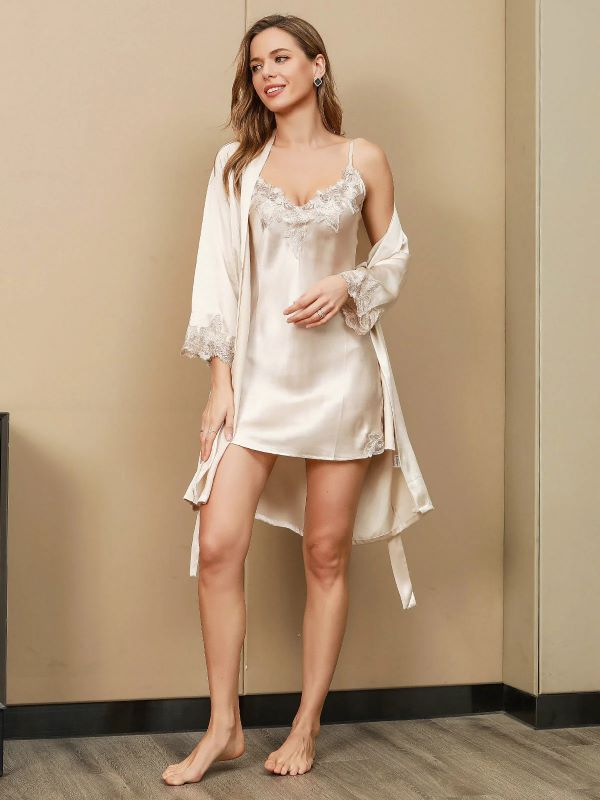
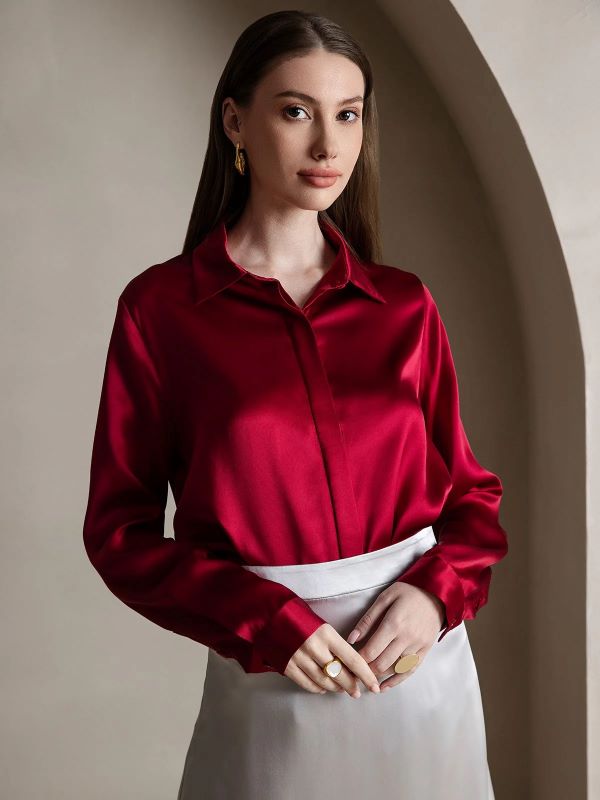
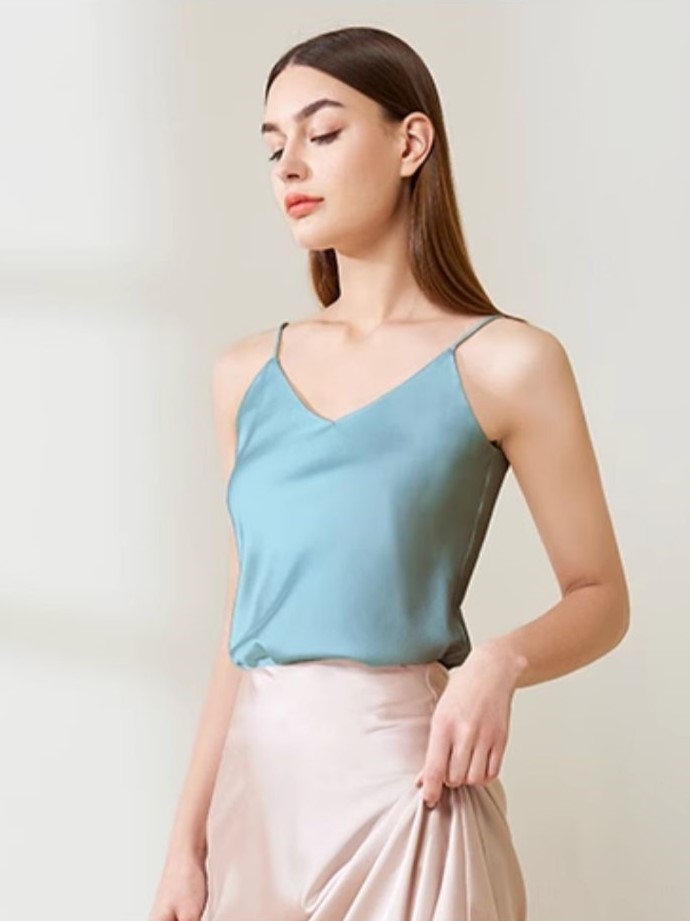
Mulberry silk can be made into silk bedding, silk apparel like pajamas and shirts, silk eye masks, and more accessories.
For more detailed features and benefits of mulberry silk, please check out our article: Why Silk is So Good for Your Skin: 6 Surprising Benefits Behind the Softness.
Tussah silk
its uses are surprisingly broad. Because tussah silk fibers are stronger and more durable, they’re not just for clothing. For example, in ancient times, military uniforms were made using tussah silk. Even today, tussah silk finds applications in industrial and defense sectors. It’s also used in making musical instrument strings, fishing lines, and nets—pretty much anything you can imagine. The potential is huge, waiting for innovators to explore.
Tussah silk feels soft and elastic, and it has excellent heat resistance—its strength only starts to weaken at temperatures as high as 140°C. It also outperforms mulberry silk in insulation, strength, stretchability, resistance to brittleness, acids, and alkalis.
Final Thought
At the end of the day, while domesticated mulberry silkworms and wild tussah silkworms might come from different worlds, they’ve both played a huge part in weaving humanity’s long, fascinating history with silk. One gives us that refined, controlled beauty we love, while the other’s a fantastic gift from the wild, full of natural harmony.
Their differences aren’t just about how the threads feel or look; they’re deeply rooted in the culture, history, and ecology each type represents. It’s this incredible balance between something tamed and something wild, and all those profound distinctions, that truly gives silk its amazing value and appeal. It’s what makes the world of silk so wonderfully diverse!
Understanding these differences doesn’t just help us pick the right silk; it also reminds us to truly appreciate every single time nature and human ingenuity come together.







Leave a Reply